
Introduction and Definition
Cellular drug delivery, Advance camouflage suits and anti-microbial towels. These are not the latest science fiction but are some examples of the uses of nanomaterials.
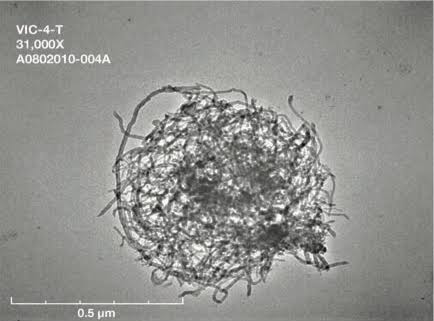
But what exactly is a nanomaterial?
To put it simply nanomaterials are materials which measure below 100 nano meters. Examples of nanomaterials that you might have heard of are Graphene and Carbon nanotubes.
So, how are they formed? After all nanomaterials don’t just fall from the sky or do they?
Nanomaterials are can either form naturally as a result of combustion and reactions such as Volcanic ash or produced purposefully through specialized function like wielding.
History
Nanomaterials are made directly after the big bang while their nanostractures are formed in early meteorites which in turn carried it to earth.
The earliest known application of nanomaterials are Lycurgus cup made in the 4th century which changes colors at certain angles.
However, the 1st modern example is when in 1857 Michael Faraday synthesized colloidal gold particles.
During the early 1940s fumed silica particles we’re used to substitute
ultrafine carbon black for rubber reinforcements.
Next, in the 1960s and 1970s metallic nanopowders are use for magnetic recording tapes.
In 1976, nanocrystals made by the now popular inert- gas
evaporation technique was published by Granqvist and Buhrman.
Today, nanomaterials are still used in a variety of ways such as nanophase engineering.
Uses of Nanomaterials
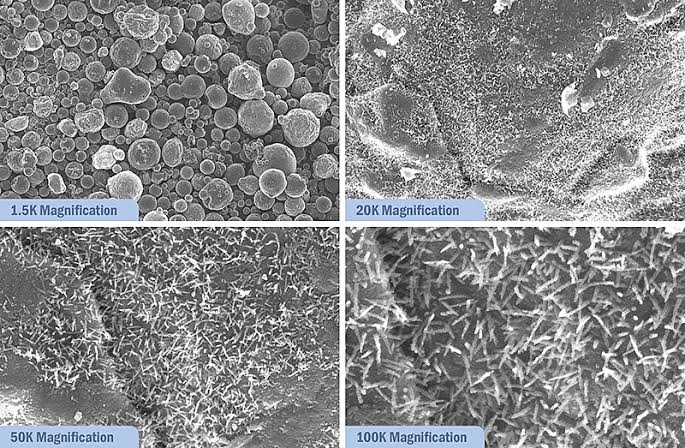
Nanomaterials are use in many fields such as Electronics, Sports and Aerospace.
In cosmetics Titanium oxide are use in sunscreen without that awkward whitening look.
While lighter and more efficient baseball bats made from nanotubes are currently used in the sport industry.
The U.S. military is currently testing nanomaterials such as Titanium dioxide to detect biological agents that might harm them. Also, they are using nanomaterials as camouflage suits.
Advantages
Nanomaterial has a lot of incredible properties that we can use like their size, versatility and high porosity which makes nanomaterials in demand to industries like electronics, bioengieneering and many more.
In the field of electronics nanomaterials are used to increase in the accuracy of the construction of electronic circuits on an atomic level such as better transistors and other electronic equipment.
This will lead to better devices such as smaller but more efficient smartphones and computers.
In the Aerospace industry, agencies such as NASA are using carbon nanotubes to morph aircraft wings.
The Nanotubes are being used to bend in response to the app of electric voltage in a composite form which could 30 percent reduction in mass.
Also, in the energy sector solar cells with the help of nanomaterials have become smaller and absorb more energy than conventional ones.
Nanomaterials have a large surface to volume ratio which permits bonding of cells and active ingredients making direct drug delivery to cells.
Can nanomaterials be used to cure cancer?
Disadvantages
There might be a lot of advantages to nanomaterials but there are also some disadvantages.
First, Nanomaterials takes complex and difficult manufacturing because of the knowledge gap regarding nanomaterials.
This will lead to manufactured nanomaterials being expensive.
Secondly, there is at risk of inhalation exposure of nanomaterials which can cause Pulmonary fibrosis and other health risk such as ingestion exposure.
In both cases there is a possibility of death.
Thirdly, there is a possibility that nanomaterials ending in aquatic ecosystem (i.e. lakes, rivers, and seas).
Remember the Titanium oxide sunscreen mentioned earlier, if it makes it way to lakes than aquatic animals such as snails will decrease in number.
Conclusion
Nanomaterials are materials that measure below 100 nano meters,they are use in a variety of ways such as sunscreen, electronics and in energy.
Despite this, Nanomaterials has some disadvantages and risk such as the possibility of inhalation, expensive manufacturing and nanomaterials ending up in bodies of water.
Nanomaterials may have their risks but it remains one of the most interesting fields in science and technology.
Resources
- https://www.researchgate.net/publication/259118068_Chapter_-_INTRODUCTION_TO_NANOMATERIALS
- https://www.twi-global.com/technical-knowledge/faqs/what-is-a-nanomaterial
- http://www.safenano.org/knowledgebase/resources/faqs/what-is-a-nanomaterial
- https://www.nano.gov/nanotech-101/what/definition
- https://images.app.goo.gl/RwBRPHjx1EQGa7vu5
- https://www.google.com/imgres

 The Science Note